Level 9: The Physical Substrate
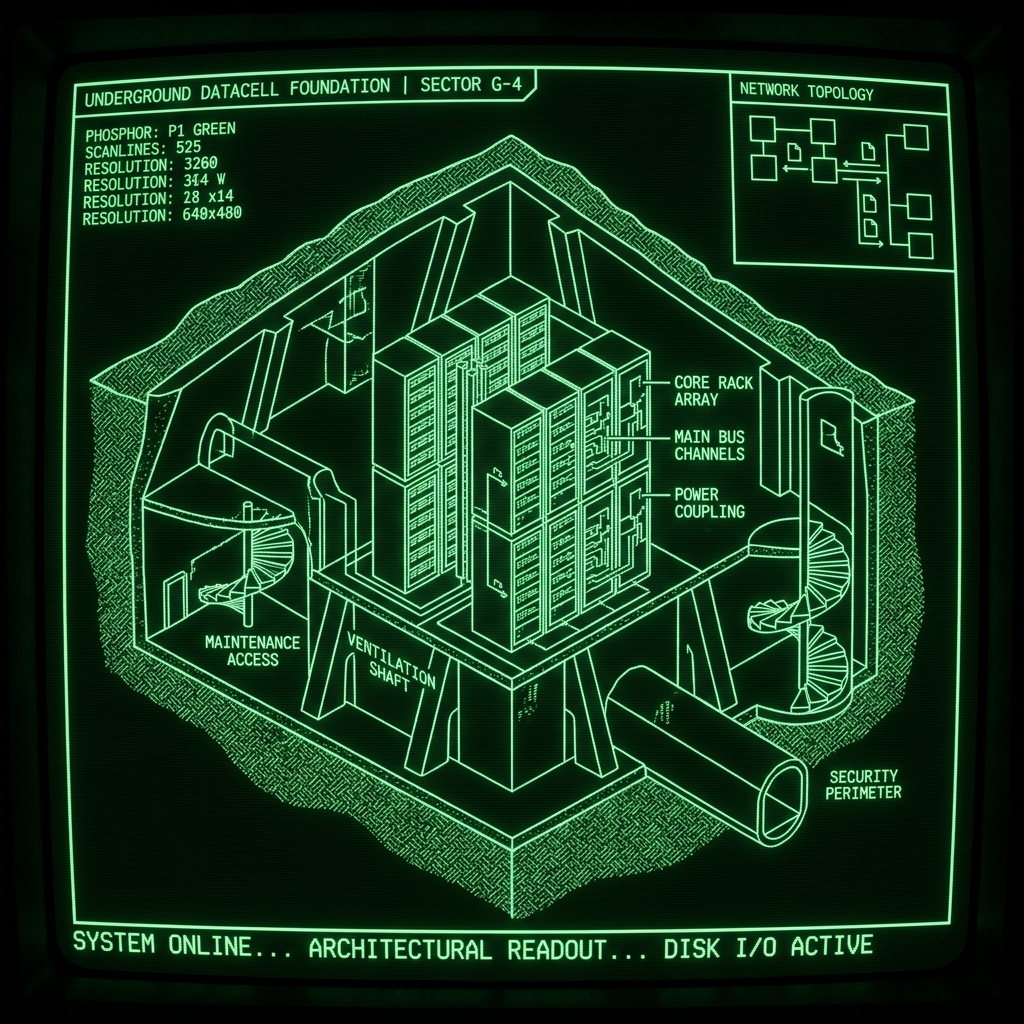
“When the grid falls and the digital sphere bleeds out, return to the stone.”
Abstract#
Every preceding topological layer in the Sovereign Canon relies upon a single, catastrophic point of failure: the global electricity grid and intact telecommunications infrastructure. In the event of an EMP or civilizational collapse, digital media is rendered instantly inert. To achieve absolute, immortal resilience, the topological state must be instantiated into the physical realm via M-DISC (Millennial Disc) and analog film.
Execution Protocol#
The Sovereign Canon mitigates digital fragility by engineering a recurring return to physical media. This is achieved through a specialized CI/CD extraction script injected into the core deployment pipeline (.forgejo/workflows/cd.yaml).
Upon execution, the Forgejo runner automatically synthesizes three physical artifacts:
- The Archival Master Tome: The system dynamically concatenates all Markdown files, theoretical proofs, and structural documents into a unified
MASTER_TOME.md, which is subsequently rendered viapandocinto a high-density, paginated PDF (SOVEREIGN_CANON_MASTER_TOME.pdf) optimized for acid-free physical printing. - Machine-Readable Data Grids: The entire compressed digital repository (
CANONICAL_VAULT.tar.gz) is binary-chunked into 2,000-byte segments. Each segment is converted into a high-density, scannable QR Code. This allows a future civilization to recover the raw data structure using only a camera, bypassing the need for manual transcription. - M-DISC ISO Staging: The PDF Tome, the QR Archive, and the raw
.tar.gzare bundled into an ISO 9660 disc image (SOVEREIGN_CANON_MDISC.iso). This ISO is instantly pushed and anchored to the IPFS Sanctum.
This ensures that a burn-ready physical backup is permanently available to any node on the mesh at the exact moment of theoretical publication.
Current Status#
Status: Automated in CI/CD
The artifact synthesis is perfectly automated. The human anchor is simply required to pull down the resulting ISO from the IPFS network and physically burn it to an M-DISC cold-storage drive.